Women, Race & Class Review
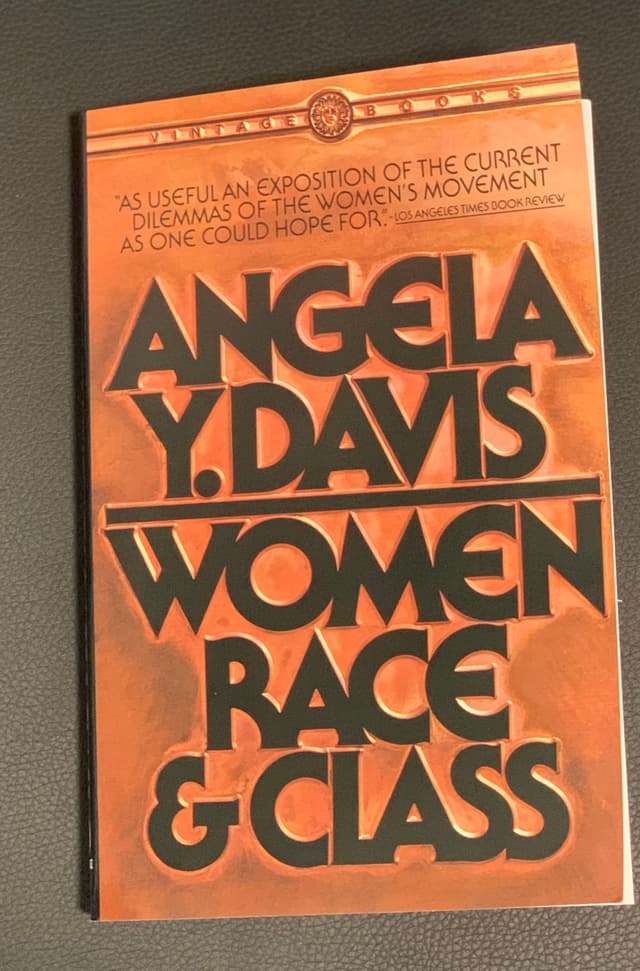
When we think of Black revolutionary icons, it's almost impossible to leave out Angela Davis, and for good reason. Her work never disappoints and she's always able to lay out very complex, hard hitting ideas in a way that's accessible to anyone interested in learning. Women, Race & Class is no different. As the title implies, this book dives into immense detail and provides a robust level of historical context regarding the deep interconnections between capitalism, white supremacy and patriarchy with the main focus being on how this has affected/still affects Black women, Black men and the Black familial structure. Davis did her thing with laying the foundation for her ideas. Let's dive into how she accomplished this.
Slavery, Racist 'Allies' & Movements with Blinders
I think what always surprises me about books like this is how much that we, as Black people, can really misunderstand how bad slavery was. (I'm looking at you ignorant negroes still saying things like "oh nah, that couldn't have been me, I would've *insert violent act here* to massa"). I mean, presumably all of us know that it was terrible. But when we really take a second and realize that our ancestors were not just mere historical abstractions, rather actual human beings, we can start to actually empathize with the plight that they went through for centuries. This empathy is what makes these first few chapters pretty tough to read, in my opinion. Chapter 1 is quite heavy, with Davis going into detail about the unique, more intense punishments that Black women were subjected to during slavery. I won't say too much about it in this review, but just know & understand that for every bruise & cut Black men received during slavery, Black women probably got twice or thrice that. (Note: this doesn't negate the trauma Black men went through during slavery. Relax). This harsh reality coupled with the fact that Black women were still expected to produce & perform at the same level as their male counterparts makes you realize that Black women were & still are indeed built different. This begs the question though... is it a good thing for them to be built different, especially when being built different is a requirement by force?
You see, even though Black women during slavery had the grit to keep up with and even exceed the level of production of Black male laborers, this wasn't a fate that they wanted or even consented to. This is where the anti-slavery movement was born, which Angela Davis discusses in Chapter 2. During this chapter, we learn that white middle class women could be found to be initially aligned with an abolitionist politic regarding slavery. The main forces driving the need for ally-ship were Sarah Moore Grimké & Angelina Emily Grimké, referred to frequently as the Grimké sisters. One thing that's made crystal clear in Chapter 2 is that the Grimké sisters were unwavering in their belief that Black people were just as entitled to their freedom and autonomy as white women. This, again, is another instance of Angela Davis laying a strong foundation for Chapter 3 where she discusses some of the pain points faced in the early women's rights era regarding race & class. Ironic yet sadly, a lot of the issues laid out in this chapter are still very prevalent today, with the main one being Black women being excluded (intentionally or not) from sharing their perspective about issues that impact them. This was apparent when no Black women were present at the Seneca Falls Convention (the first women's right convention in the nation's history). The craziest part of this chapter for me had to be the incident where Frederick Douglass' (yes, THE Frederick Douglass) daughter was barred from attending classes with white girls by a white principal. The kicker here is that the white principal was a self-proclaimed abolitionist. This fact alone has a lot to unpack, but what's unfortunate is how often we see this trope come up again and again today. I'm sure we've ran into a person at some point who claims to have a certain politic, but when sh*t hits the fan that politic goes out the window (seriously, this book was really ahead of its time in a lot of ways). Davis uses this incident with others as supporting arguments to demonstrate that the abolitionist & early women's rights campaigns lacked a holistic anti-racist consciousness, which would end up causing generational problems.
Oh and chapter 4 was about racism in the women's suffrage movement... F*ck Susan B. Anthony. Jokes aside, this chapter more or less solidified what was presented in earlier chapters. White allies who are lukewarm in their position will almost always end up doing things that fit their own self-interests when given the opportunity. We see this clear as day when suffragists made the assumption that if Black people were given the right to vote, they would suddenly have power that was comparable to that of white people during that time. There's a specific part of the chapter where Elizabeth Cady Stanton & Susan B. Anthony made the bold (and wrong) assumption that the abolition of slavery boosted Black people up to a social status equivalent to white middle class women... yeah they showed their asses a lot in this book. Nonetheless, the mere threat of Black people even coming close to being the equivalent of middle class white women was enough to make them completely betray their politic & ultimately the Black people they claimed to be fighting for the whole time. Pretty heavy stuff.
Later in the book, Davis unpacks the myth of the Black rapist. Before I continue it's important to note that she is NOT arguing that Black men are immune to/have not committed rape or sexual assault. Rather, she spends time this chapter unpacking where this trope emerged from, what it means in relation to Black women, and how many white feminists during the early stages of the anti-rape movement came to many really, really stupid conclusions. One excerpt that I remember vividly is when feminist writer Susan Brownmiller argued in her book Against Our Will: Men, Women and Rape that Emmett Till's wolf whistle was much more than a childish prank. She states that the whistle was "short of physical assault" and served as a reminder to Carolyn Bryant that Emmett had every intent to "possess her"... Yikes. Yet again, we have an instance of a white woman who claims to long for the freedom of women everywhere getting caught up saying racist or borderline racist rhetoric.
Black Women Creating Space
After the first four chapters, we now have an idea as to why Black women ultimately needed their own space to fight for their own rights, whether it was suffrage or simply their own humanity. During this part of the book, Davis begins to paint the picture of what the economic life looked like for Black women following the abolition of slavery. Despite being "free", Black women were still given the most menial forms of labor for low wages. This typically looked like being a domestic servant. As you could imagine, lots of Black women weren't too thrilled about living a portion of their life as slave just to be emancipated and only having the opportunity to return to, well, a different form of slavery. This reality is what ended up driving Black women's desire to want more.
Davis talks briefly about Black women & the Club movement in chapter 8. From what I could glean, I think this was the first instance in the book where Black women were shown having their own space. A lot of these clubs were found throughout the east coast and were created and led by solely Black women. Among these women were icons such as Ida B. Wells. Though Davis provides context & a bit of celebration for this being the first time that Black women had their own thing, she didn't shy away from critiquing the clubs on some of their elitist ways. This usually looked like the typical Talented Tenth attitude that's always been quite prevalent amongst Black middle class clubs & organizations. Again, nothing new!
Class-Consciousness & Intentional Solidarity Between Races
The latter part of the book was a bit easier to get through, mainly because we finally begin to see consistent instances of class solidarity that doesn't get poisoned by white supremacy. We see instances of communist women, both Black and white, dedicating their lives work to uplifting the Black community from economic hardship. What I found most fulfilling about this is that the ways they went about uplifting each other was never transactional. All of the instances that I could see were very interpersonal with each woman having a legitimate connection to those that they were aiming to help. In my opinion, I think this is what just about anyone can take away from the book (along with making sure you're not an ally with a weak ass politic). Ultimately, the ability see each other as human can often act as enough fuel to push a person to fight for said human. Sh*t starts to get sticky when that ability has never been established in a legitimate way. It usually leaves room for performative behavior and/or a lack of a genuine desire to want better for a person or group. Ultimately, Women, Race & Class is a good read for anyone who wants to expand their knowledge about how Black women & Black people got here and what can be done to get us all to a better spot going forward. I also recommend this for anyone who's seeking to understand the connection between capitalism, white supremacy, & patriarchy and how it's historically impacted Black women. All in all, this book has been amazing! I look forward to reading more of Angela Davis' work going forward.